Launching an LLM Powered Audience Intelligence Product in 6 Weeks - Ada AI
Launching an LLM Powered Audience Intelligence Product in 6 Weeks - Ada AI
Launching an LLM Powered Audience Intelligence Product in 6 Weeks - Ada AI
CHALLENGE
CHALLENGE
CHALLENGE
We had valuable audience and behavioural data, but most clients lacked the technical capability to ingest raw data feeds or analyse them internally. This meant brands and agencies relied heavily on managed service analysis, slowing down access to insights.
At the same time, tools like OpenAI ChatGPT and Google Gemini were changing how people expected to interact with information.
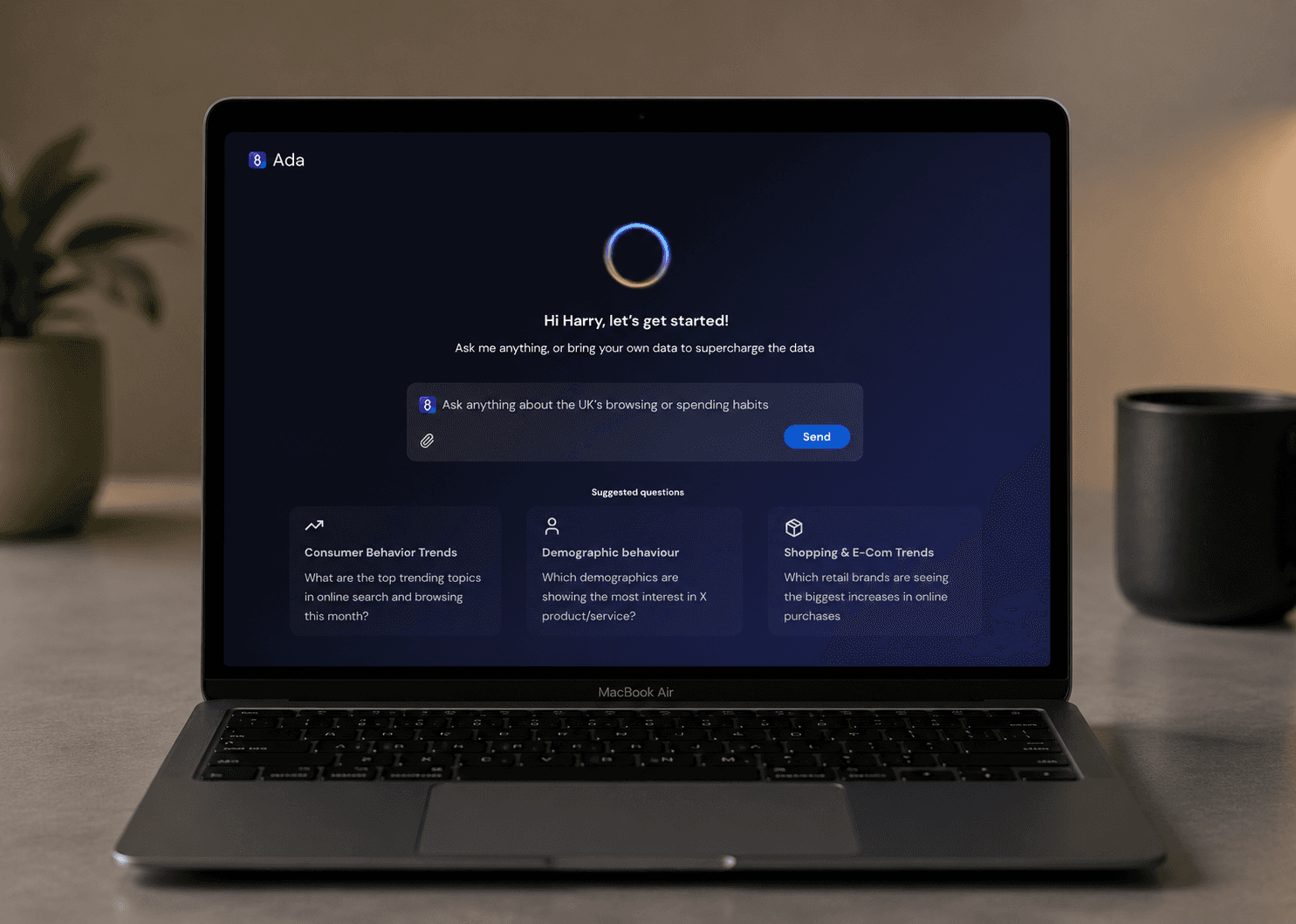
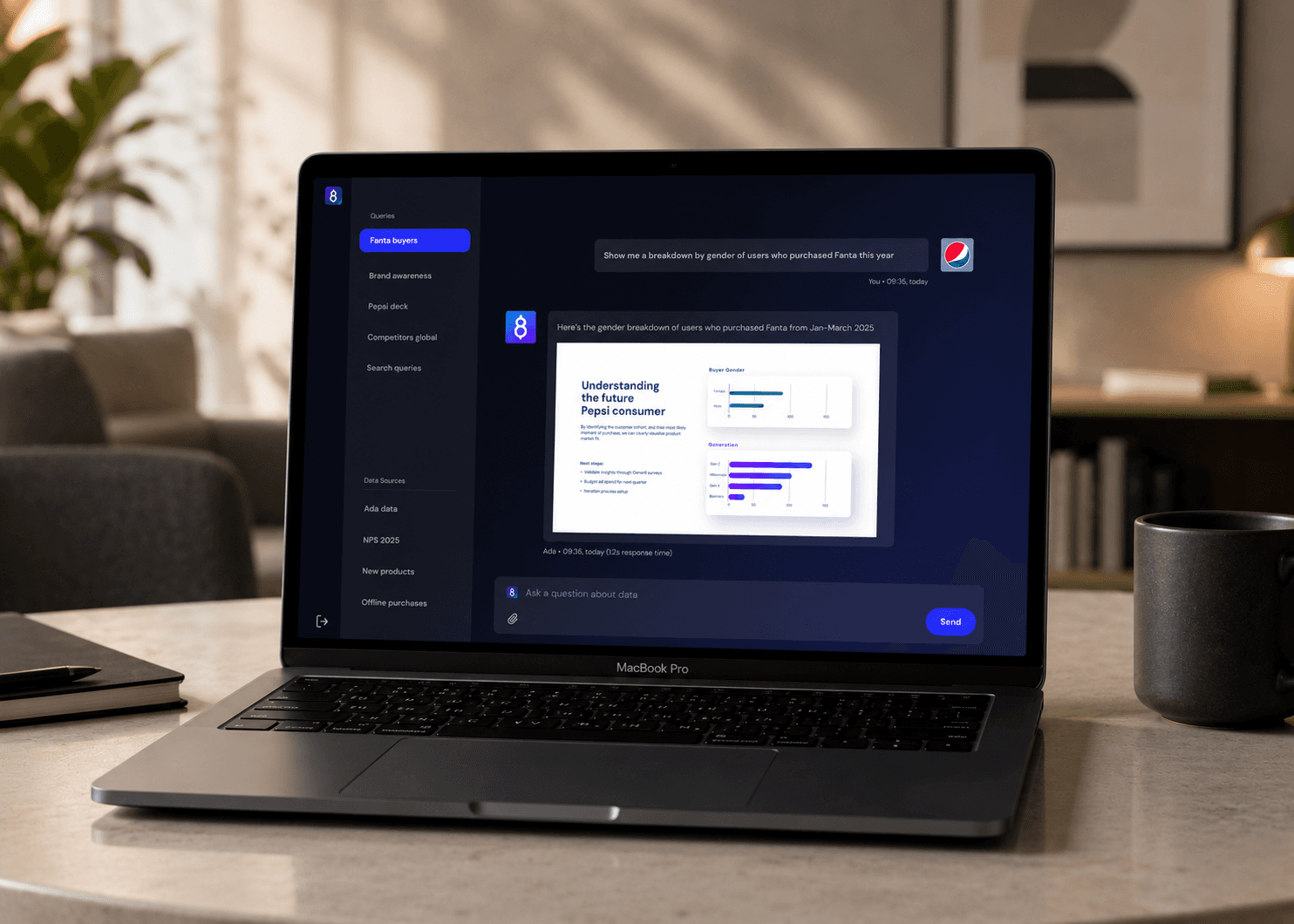
The challenge was to design an AI native product that allowed non-technical users to access complex audience insights through natural language instead of dashboards or analysts.
This was the challenge driving the business’s ambition to launch a new mobile app. The right approach wasn’t obvious: a quick browser-based solution or a native app with greater capabilities?
As the design lead, I guided cross-functional teams through workshops, user validation, and iterative design. What we created wasn’t just an app but a platform that empowered users to reclaim value from their personal data, putting Google at the centre of the experience.
DISCOVERY & RESEARCH
DISCOVERY & RESEARCH
Research with agencies revealed teams were already hacking together internal AI workflows using exported reports and custom GPTs to speed up audience profiling.
The insight was simple:
users didn’t want more dashboards, they wanted faster answers.
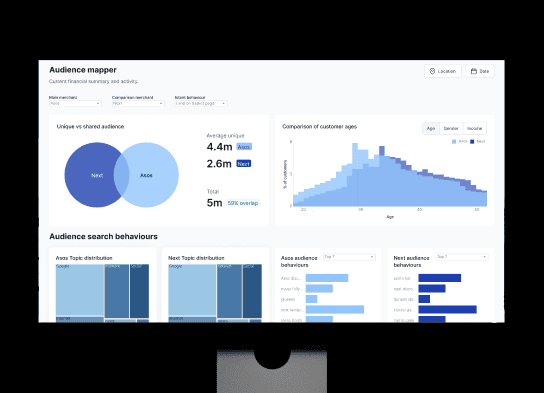
Working closely with stakeholders and engineers, we identified an opportunity to combine proprietary data with conversational AI to make research self serve, faster, and more accessible.
The initial idea was simple: let users earn by browsing. But discovery workshops revealed this wouldn’t meet deeper user needs. Whilst familiar, browsing alone wasn’t inspiring or empowering.
Through stakeholder discussions, I proposed a bold pivot: allow users to earn directly from their Google data. Google, as a tech giant, has accumulated vast user data. Enabling people to reclaim value from it felt innovative and empowering. The challenge was to make this idea intuitive and seamless.
Research with agencies revealed teams were already hacking together internal AI workflows using exported reports and custom GPTs to speed up audience profiling.
The insight was simple:
users didn’t want more dashboards, they wanted faster answers.
Working closely with stakeholders and engineers, we identified an opportunity to combine proprietary data with conversational AI to make research self serve, faster, and more accessible.
USER TESTING & ITERATION
USER TESTING & ITERATION
I designed the experience around conversational exploration with:
guided prompts
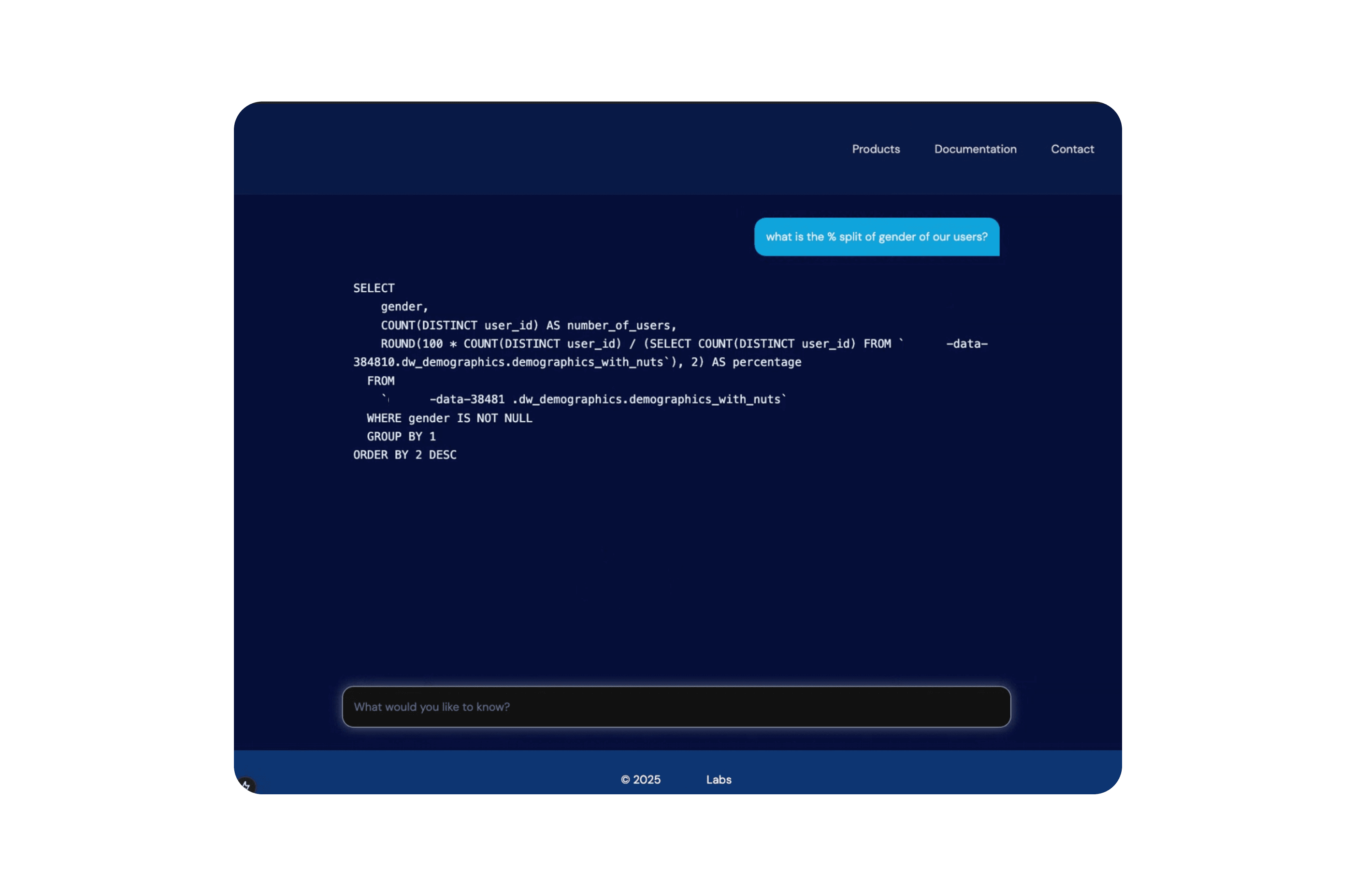
natural language queries
AI-generated summaries
and explainable responses
A major focus was trust. I introduced patterns that clearly separated factual data from inferred insights and surfaced supporting signals behind AI responses.
Because we launched in 6 weeks, the process relied on rapid prototyping, fast feedback loops, and close collaboration with engineering to simplify the experience for non-technical users.
Discovery uncovered key user needs: simplicity, transparency, and control. This shaped a vision for users to easily connect their Google accounts, track earnings, and feel empowered.
I prioritised concepts and developed wireframes focused on trust and ease of use. User testing refined the designs further, ensuring the process was intuitive at every step. The final experience made connecting accounts and earning from data seamless and rewarding.
PIVOT
PIVOT
As the product evolved, we realised the bigger opportunity wasn’t just analysing past behaviour, but predicting future trends.
We began exploring how synthetic data and behavioural signals could help forecast:
search demand
purchase intent
and audience shifts over time
This moved the product from a research tool toward predictive audience intelligence.
As the product evolved, we realised the bigger opportunity wasn’t just analysing past behaviour, but predicting future trends.
We began exploring how synthetic data and behavioural signals could help forecast:
search demand
purchase intent
and audience shifts over time
This moved the product from a research tool toward predictive audience intelligence.
OUTCOME
OUTCOME
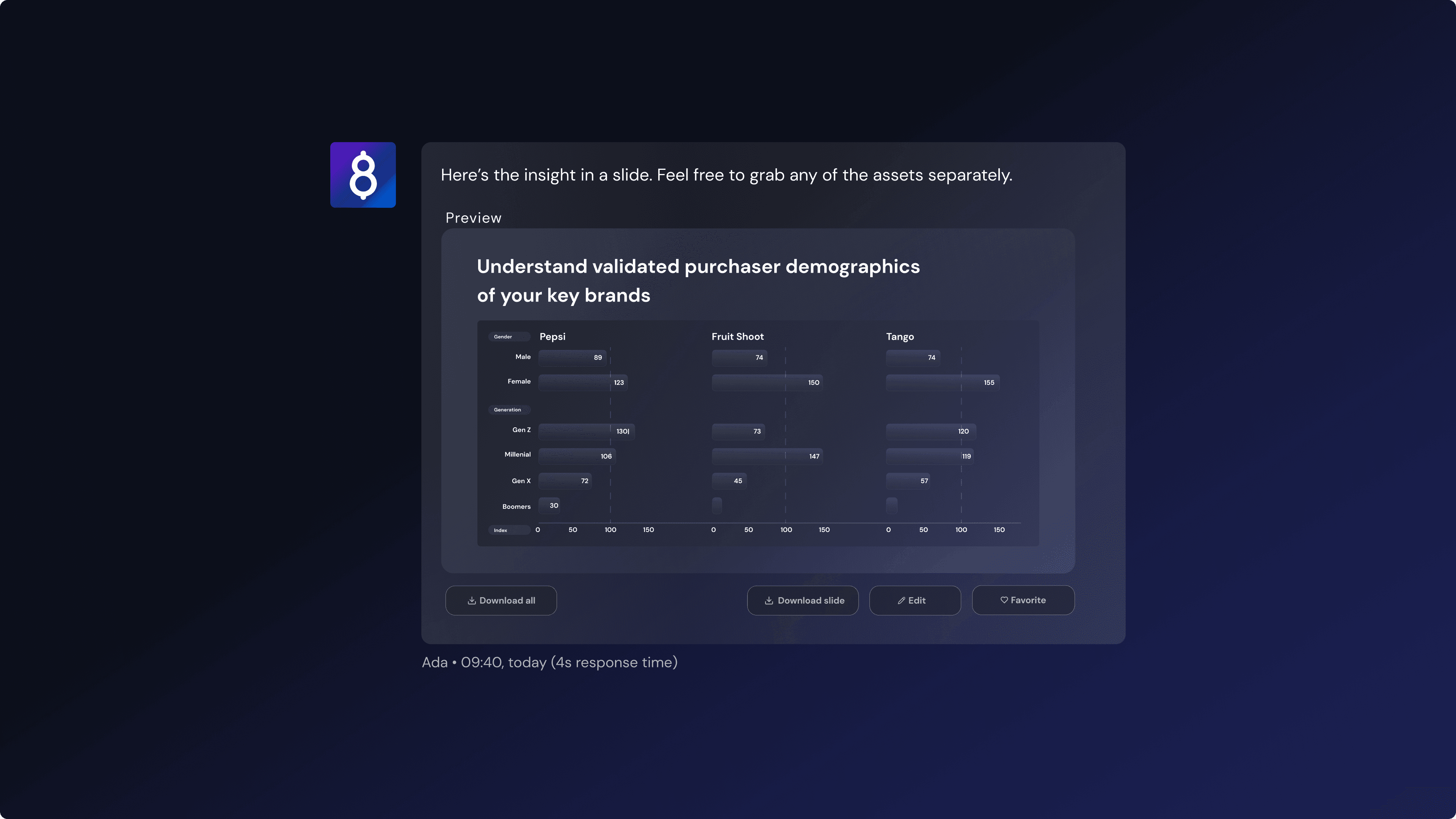
Ada AI launched successfully in 6 weeks and repositioned the business as an AI-native insights platform.
The product:
enabled self serve audience research
reduced reliance on managed-service analysis
accelerated insight generation for agencies and brands
and laid the foundation for predictive analytics capabilities
I am now in the throws of working through the patterns for a similar product geared towards AI data only and how users are using AI and spending their time online.
It empowered users whilst driving significant growth and strengthening brand trust.
By taking bold risks and listening to users, we created a product that gave them control over their data and set a new standard for digital empowerment. The project also set a scalable design framework for future digital products.
6
Weeks
8
Clients